

PRODUCTS AND SOLUTIONS | 30 September 2026
Your Customer Doesn’t Want Another Keyring. What Will Make Them Want to Keep It?
If you are ordering several hundred promotional items for an event, trade show or campaign, you want people to actually use them rather than put them away with the rest of the materials. The same applies when you are a promotional agency looking for a product for your client. Simply putting a logo on a keyring does not guarantee that the recipient will want to use it.
That is why it is worth looking at a promotional product from a different perspective. Not only through the lens of the brand, but above all from the perspective of the person who will receive it. Because ultimately, they decide whether the keyring will stay with their keys, end up on their desk or disappear into a drawer.
A Branded Product Is Not Necessarily a Product That Works for the Brand
The logo matters, but it does not have to be the main reason someone keeps a promotional product. At trade shows, conferences and events, recipients often receive several, a dozen or sometimes even more different products. If yet another keyring looks exactly like the ones they have already received, it is difficult to expect this particular one to stay with them for long.
This does not mean that every promotional product needs to be complicated or highly spectacular. Sometimes all it takes is a well-chosen function, an interesting shape or a reference to a product the brand is known for.
A good promotional product should give the recipient a reason to keep it. It can be useful, look good or remind them of a product or brand they have interacted with. Ideally, it combines several of these qualities.
Start With the Person Who Will Receive the Product
A marketing manager orders promotional products for event participants, an agency prepares a product for its client, while an event organiser looks for something for attendees. A company may also need gifts for employees or business partners. Each of these situations may call for a different type of promotional product.
For an employee, a practical function may be more important. At a trade show, what matters may be whether the product stands out from all the other materials. For a brand campaign, it may make more sense to reference the brand’s product, distinctive visual element or identity.
That is why, before ordering personalised promotional products, it is worth asking yourself one question:
What should the recipient do with this product after receiving it?
Function Matters — But You Don’t Have to Add Everything
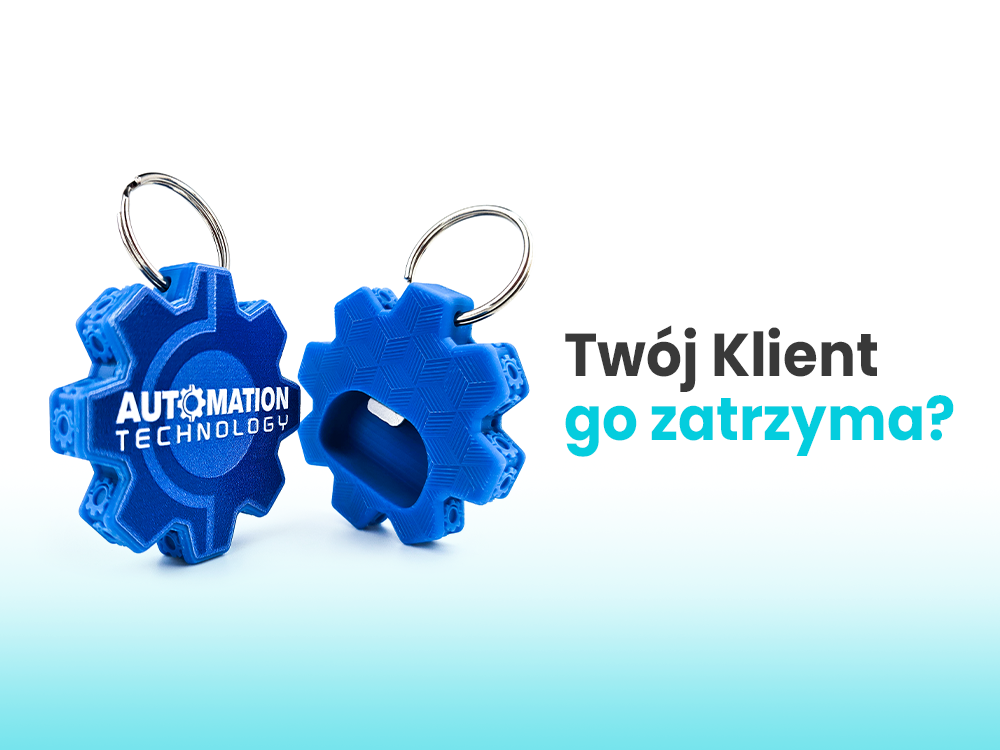
A keyring can have an additional function — it can be a bottle opener, include an NFC tag, a QR code or a bit holder. But the mere possibility of adding a feature does not automatically make it a better product.
If you are creating a promotional item for a technical company, a bit holder may be genuinely useful. If a brand wants to direct recipients to its website or offer, NFC may be a more interesting solution.
The function should therefore be based on who will actually use the product. There is no point adding NFC simply because it is an available option if the recipient has no reason to use it.
In a well-designed promotional product, functionality is not an extra feature added for the sake of it. It is part of the concept behind the entire product.
The Shape Can Say More About the Brand Than the Logo
Not every personalised keyring has to be a simple shape with a logo. If a brand has a distinctive product, character, symbol or visual element that customers immediately associate with it, that is exactly what can be used.
The product itself can become the promotional item. A miniature version of a product is more recognisable and can be more interesting to the recipient than a standard logo keyring. One example of this approach is a keyring inspired by a Thermomix device — its shape recreates the distinctive appearance of the product.
A similar approach can be taken with a place, event or specific location. A promotional item can take the shape of a restaurant, hotel, stadium or another recognisable place, allowing the product itself to tell the story of what it is associated with. We showed a similar approach when designing magnets in the article “A Magnet as a Restaurant, Hotel, Stadium… and Your Place.”
This is what gives you greater freedom when designing personalised promotional products. You do not have to start with a ready-made shape and then figure out where to put the logo. You can start with what makes the particular brand distinctive.
Personalisation You Can See and Feel
With personalised keyrings, you can work not only with shape and graphics, but also with details that only become apparent up close.
Raised 3D elements can be used to highlight specific parts of a design. You can work with colours, textures, colour transitions and different finishes. This means that the surface of the product does not have to be simply flat.
This is particularly important for designs where small details matter. A texture can reference the product, a raised pattern can highlight a specific part of the graphic, while the right finish can change the way the product looks in the light.
With these techniques, a personalised promotional product can look like a specific brand product rather than a standard keyring with a logo printed on it.
What Will the Recipient See Beyond the Logo?
The logo matters, but it should not be the only thing that attracts attention. The recipient does not look at a promotional product in the same way as the person who ordered it. They are not thinking about whether the colours match the brand guidelines or whether the logo is the correct size. They are thinking about whether they like the product, whether it will be useful to them and whether they want to take it home.
That is why it is worth looking at the design from this perspective before production.
If there were no logo on it, would the product still look interesting? Does it have a purpose? Does it stand out from other promotional products?
If the answer is yes, there is a greater chance that the recipient will continue using the product long after the event is over.
5 Questions to Ask Before Ordering Promotional Products
Before ordering personalised promotional products, it is worth checking a few things. This can help you avoid ending up with a product that looks great in a visualisation but does not necessarily work in the hands of the recipient.
The answers to these questions help turn a general idea into a product that is tailored to both the recipient and the situation in which it will be used.
From Idea to Finished Promotional Product
When designing an unusual promotional product, you do not always have to start with a finished design. The starting point can be a logo, a photo of the product, a distinctive shape, character, symbol or an idea for a specific function.
The next step may be a 3D design, which allows you to check the shape, colours and details before production begins. This is particularly important for custom shapes, where even a small change can affect the appearance and functionality of the final product.
This way, the design process does not start with choosing an off-the-shelf promotional product. It starts by defining who the product is for and what will make that person want to keep it.


 +48 791 354 426
 biuro@piap-org.pl