

INDUSTRY ARTICLE | 25 May 2026
B2B Strategy on LinkedIn in 2026: The Triumph of Personal Branding Over a Faceless Logo
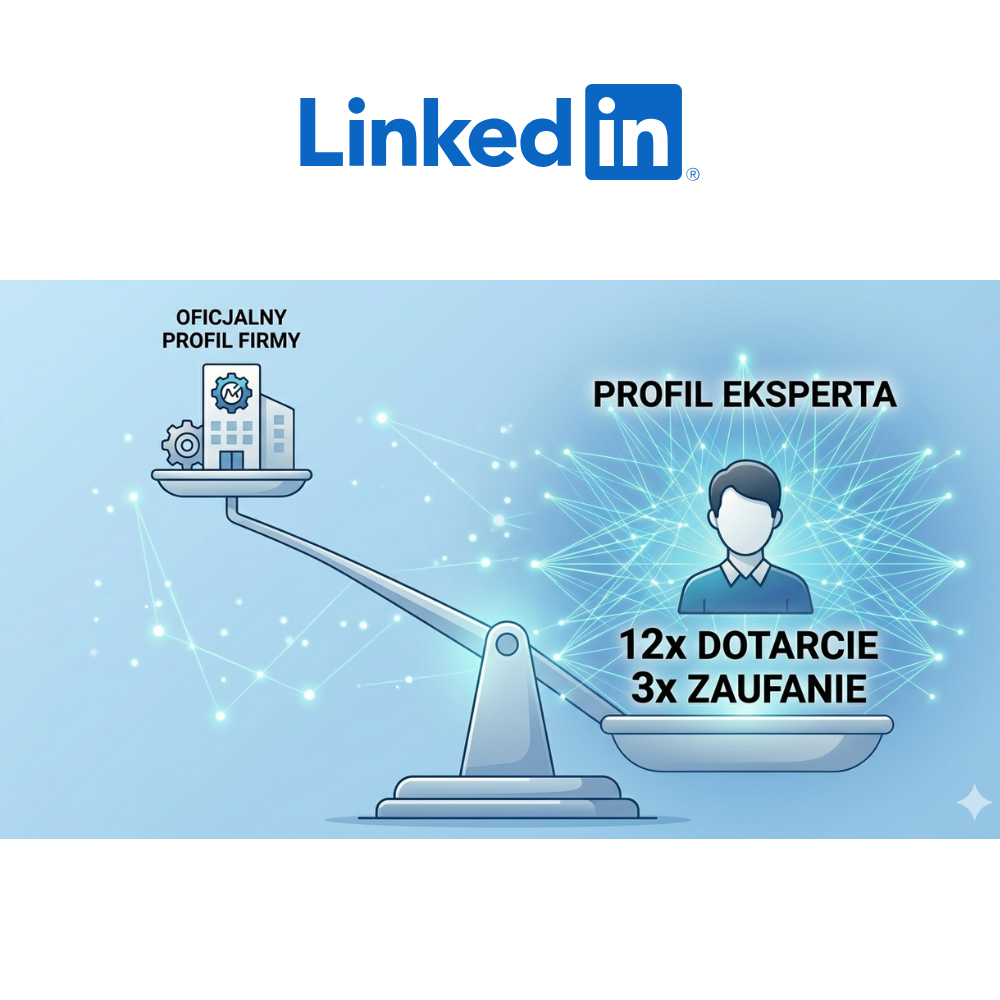
In the promotional products and advertising industry — where trust and direct relationships remain the foundation of business contracts — 2026 marks the final decline of traditional corporate communication. B2B market data leaves no doubt: company pages on LinkedIn have become little more than static, passive business cards. They now serve mainly as formal proof of a company’s existence, while the real drivers of inquiries and sales are personal profiles of leaders and their teams.
While the organic reach of posts published by company pages has dropped dramatically to around 1% of followers, the activity of real people within organizations cuts through the information overload almost effortlessly. In the reality of agencies and suppliers associated with PIAP, it is direct person-to-person contact that determines who wins the biggest contracts.
The Reach Battle: Why Company Profiles Lose to People
Today’s LinkedIn algorithms strongly favor consistency, authenticity, and engagement — qualities that only a human voice can truly deliver. The imbalance between a faceless logo and an employee’s profile is striking:
For the advertising sector, the conclusion is simple: the company’s strongest marketing asset is no longer a perfectly planned publishing calendar for its company page. It is the visibility and expertise of its people. Building employees’ positions as thought leaders who share unique perspectives and industry experience automatically — and at no additional cost — increases the credibility and prestige of the entire company.
The New Role of the Company Page: Stop Promoting, Start Supporting People
Does this mean company pages should be abandoned completely? Absolutely not — but their role must be entirely redefined.
Instead of publishing self-promotional posts about how great the company’s services are, company pages should support the team in two key ways:
Shortening the Sales Journey: The “Butterfly Strategy” in Practice
Modern B2B relationship-building is based on dialogue rather than one-sided sales messaging. In the promotional products industry, purchasing decisions happen faster when clients — often marketing directors or HR managers — see a real person on the other side whom they can message directly, instead of being forced through impersonal contact forms.
To make this mechanism work effectively, experts recommend implementing the 10–2–1 model in everyday business activity:
With this approach, an employee’s LinkedIn profile stops being a digital résumé and becomes a dynamic, always-open storefront that builds trust long before the first official meeting.
Showing Your Face as Protection Against Mass-Produced AI Content
In the era of AI-generated mass content, a recognizable and authentic voice within a team becomes the best protection for a company’s reputation.
Search engine algorithms increasingly index and prioritize original LinkedIn articles and newsletters, treating them as reliable and trustworthy B2B knowledge sources.
The winners are leaders and salespeople who are not afraid to show their face and share their own perspective — openly discussing both successes and lessons learned from difficult projects. This helps them stay memorable both to business partners and to search systems.
In 2026, involving employees in representing the company externally is the cheapest and most effective way to significantly increase market share in the promotional products industry.
Summary and Key Conclusions for the Advertising Sector
The complete invisibility of leaders and sales teams in the digital space is becoming a serious business risk. A LinkedIn company page alone will no longer bring in new clients.
Success in 2026 depends on abandoning the traditional “broadcast communication” model in favor of active participation in micro-communities. Today, the strongest and most profitable business partnerships are built in meaningful discussions led by real people in comment sections — not through corporate announcements.
Magdalena Nelke
Strategic B2B Communication and Corporate Image Management | MN PROJECT


 +48 791 354 426
 biuro@piap-org.pl