

INDUSTRY ARTICLE | 30 September 2026
Customers Ask About Price When They Don’t See the Value. How Can Sheridan’s Big Five Help You Show It?
The customer asks: “How much does it cost?”
In the promotional products industry, this is an everyday occurrence. The problem is not the question itself. The problem starts when the entire conversation comes down to a table: product, quantity, price.
Price Is the Easiest Point of Comparison
If the customer doesn’t understand the difference between materials, branding methods, print durability, lead times, logistics, and the impact a product can have on brand perception, they will compare the easiest thing to compare: price.
And they will choose the cheapest option.
That is why educating the customer is not just a “nice addition” to the sales process. It is a way to demonstrate the value of your offer before the customer puts it in the same category as three other quotes.
In his book They Ask, You Answer, Marcus Sheridan describes an approach based on a simple idea: customers have plenty of questions before they ever speak to a salesperson. They look for answers on company websites, Google, social media, and expert content.
If a company doesn’t provide those answers, the customer will find them anyway. Just not necessarily on its website...
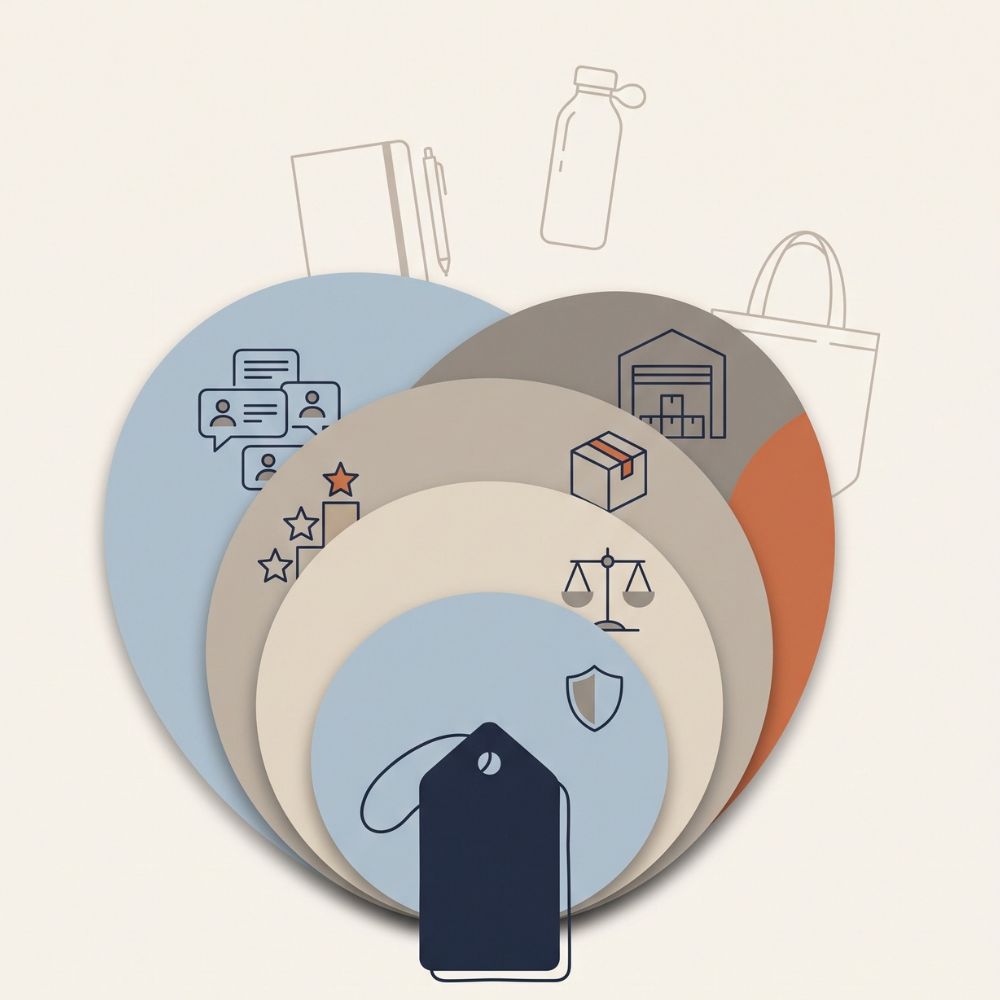
The Big Five as a Map for Sales Content
Sheridan identifies five topics that are particularly important to customers:
In the promotional products industry, this provides a ready-made content roadmap.
You can explain what determines the price of a product. Show when a cheaper promotional item can hurt a brand’s image. Compare different branding methods. Create product roundups for specific campaigns. Showcase projects that prove a well-chosen promotional product is not just a “freebie with a logo”, but a meaningful touchpoint between the customer and the brand.
An educated customer asks better questions.
Not just: “How much?”
But also: “Which option will be more durable?”, “What will work best for our target audience?”, “Which product will stay with the recipient longer?”, “Which one will tell our brand story better?”
That’s when the conversation stops being about the cheapest product and starts being about making the right choice.
Magdalena Nelke
More examples and practical insights on B2B communication, localization, and customer education can be found on the author’s LinkedIn profile: Magdalena Nelke on LinkedIn


 +48 791 354 426
 biuro@piap-org.pl